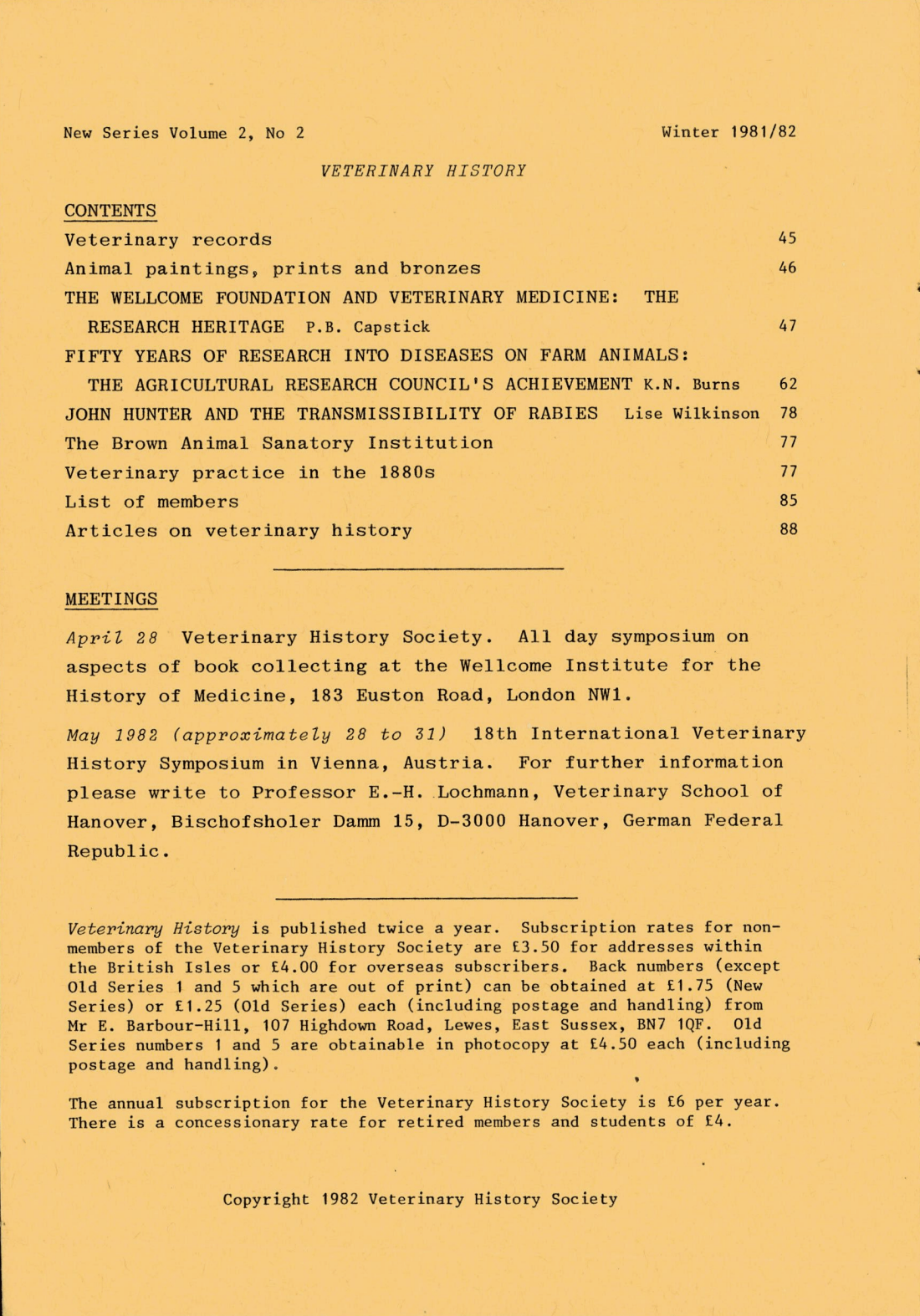
The Wellcome Foundation and Veterinary Medicine: The Research Heritage
A history of the Wellcome Physiological Laboratory, established in 1894. Research into veterinary diseases and medication started in 1900. There was the development of vaccines for canine Distemper, Leptospirosis, Marek’s Disease and Feline Infectious Enteritis. A lot of research was on Foot-and -Mouth disease and on attempts to create vaccines. Early drugs developed were digitaloids, penicillins and anthelmintics. William Cooper was a veterinary surgeon in Berkhamsted from 1843. He started producing his own remedies, especially sheep dips. The business prospered, especially with anthelmintics and ectoparasiticides, and eventually merged with Wellcome. The Wellcome Trust was founded in 1936.
P B Capstick
Fifty Years of Research into Diseases on Farm Animals: The Agricultural Research Council’s Achievement
The Agricultural Research Council was founded in 1931 and was responsible for state funded agricultural and food research. There were four main institutes carrying out this work at Compton (cattle and pigs), Pirbright (FMD and exotic diseases), Moredun (sheep) and Houghton (poultry). Major disease investigated were FMD, Swine Vesicular Disease, Brucellosis, Johnes’s, Mastitis, E coli infections, Louping Ill, Scrapie, Marek’s Disease, Salmonellosis and Coccidiosis.
K N Burns
John Hunter and the Transmissibility of Rabies
John Hunter (1728-1793) was a medical physician to the army and to the Prince of Wales. A history of his investigations into Rabies.
Lise Wilkinson
Please note
Buy now