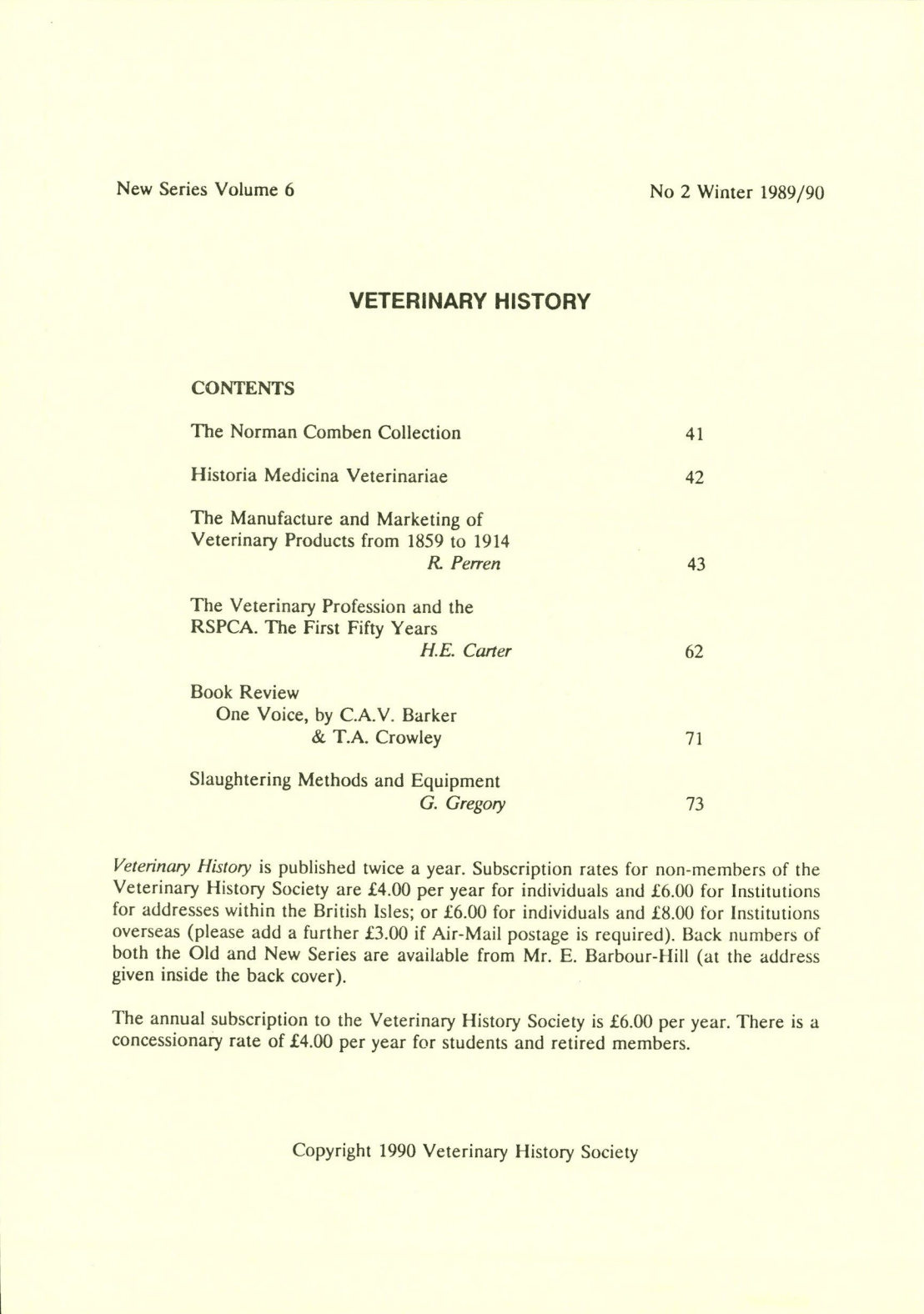
The Manufacture and Marketing of Veterinary Products from 1850-1914
The largest purchases of animal medicinal products were by farmers, farriers and domestic households, rather than the veterinary profession. Even by 1850 there were still very few veterinary surgeons in rural areas. Advertising reflected the market situation. An early popular product was Harris’s Mixture, which was claimed to treat a wide range of diverse conditions. Another similar product was Cupiss’s Constitution Balls. General medicine chests became available for farmers containing a variety of potions and powders. Although the ingredients in early medications had been around for a long time, the new approach was for branded medications. An increasing range of medications for dogs appeared in the veterinary press. Development of antiseptics and disinfectants progressed through the nineteenth century. Along with the development of medications was the arrival of syringes, tracheotomy tubes enema pumps, funnels for intravenous administrations and various catheters. Use of fleams is described. Ether weas in use after 1846 and other anaesthetic agents became available. Once the urgent need to develop a Rabies vaccine in Europe had been achieved; a more rapid development of other veterinary medications progressed, a lot of which were imported into the UK. A lot of advertisements are illustrated.
Richard Perren
The Veterinary Profession and the RSPCA, The First 50 Years
Richard Martin was an Irish lawyer and MP, who sponsored the first bill to come before parliament on animal welfare in 1822. The Society for the Prevention of Cruelty to Animals (later ‘Royal’) was founded in 1824. John Gamgee, from the London College was very supportive of Richard Marti. William Youatt was a prominent London veterinary Surgeon and was the vet for the SPCA. For a short period. There were differing attitudes to cruelty within the veterinary profession and the public at large. The RSPCA was supported by most of the veterinary profession and veterinary press in their battle against animal cruelty, in particular against vivisection, originally meaning the dissection of living animals.
H E Carter
Slaughtering Methods and Equipment
A review of slaughtering methods in the nineteenth and early twentieth centuries. By the early nineteenth century there was rising public concern about slaughter methods. The RSPCA campaign for improving abattoir welfare standards started in the early 1860s. The first legislation appeared in 1909, which introduced a list of model by-laws, the most important was the requirement for stunning before bleeding. The implementation of these by-laws was patchy and lead the RSPCA to campaign for proper legislation. Various methods used for stunning, bleeding and the equipment used are described. The use of pistols, masks, humane killers, captive bolts and electronic stunning are described.
G Gregory
Please note
Buy now